How I Work: Applying Systematic Focus to Build Viable Foundations
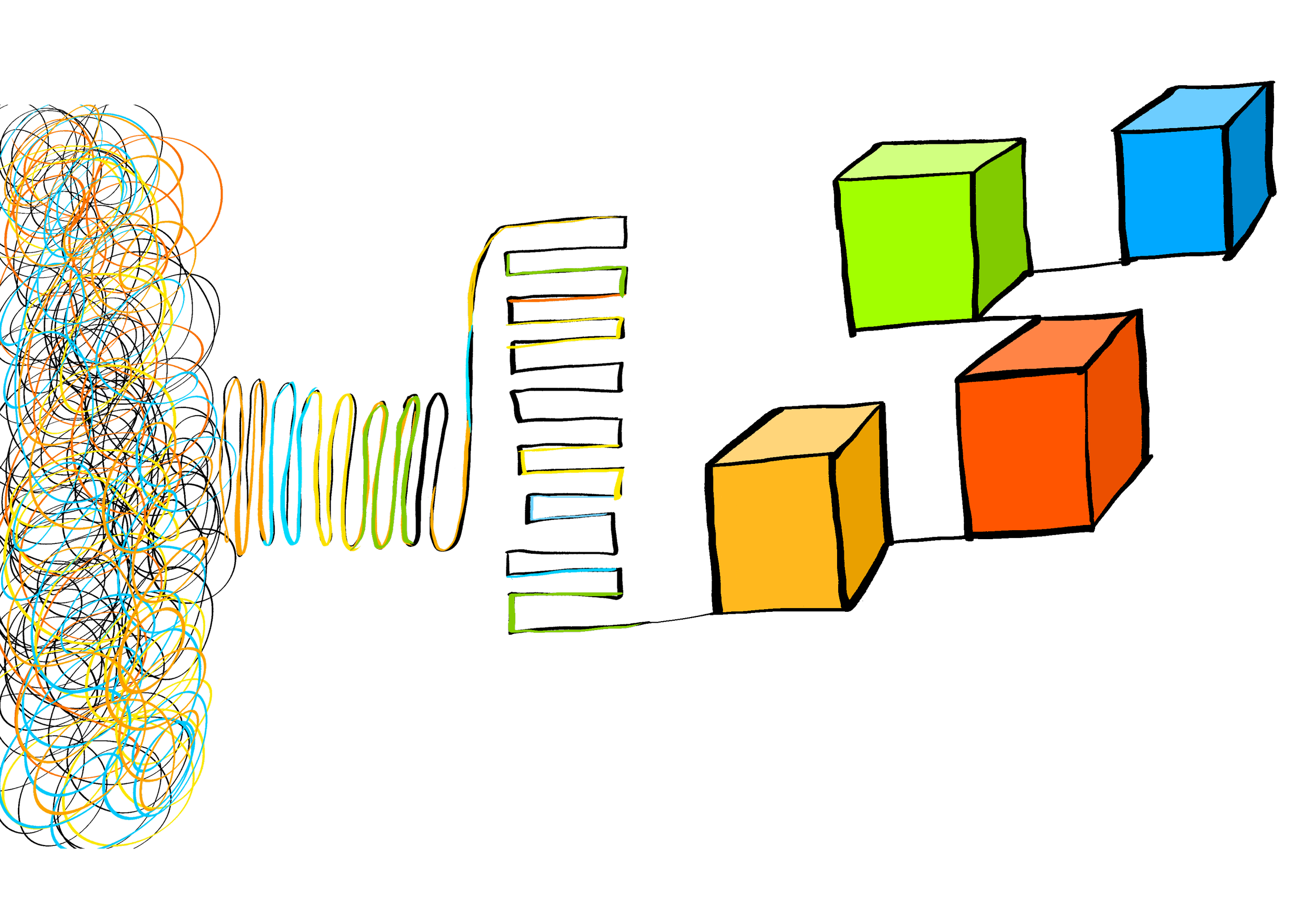
I thrive for clarity
Ambiguity kills credibility. Having worked with over 15 startups, I know the biggest danger is assuming everyone understands what I'm doing or why. From the moment I am involved in a project, I ensure I fully understand the team's needs, and most importantly the team knows exactly what I am doing and why.
This is achieved through Organized Transparency.
To ensure this level of clarity, I rely on two key structures: my 4 Pillars of Clarity for systematic partnership, and my Three-Dimensional Filter for rigorous method selection.
1
Get the real “Why” : Strategic alignment
“Honey, we need to do a survey to know if it’s gonna work ”
🤯
“Hold on.. Before jump into a test, let’s define what do we me by “if it’s gonna work” ”
🕵️♀️
My role is to partner with teams to ensure product success. I run stakeholder discovery sessions early to gain alignment and ensure the entire team owns the research goal of solving the right problem.
I use two key collaborative documents in the initial stages to capture and structure the team's collective understanding:
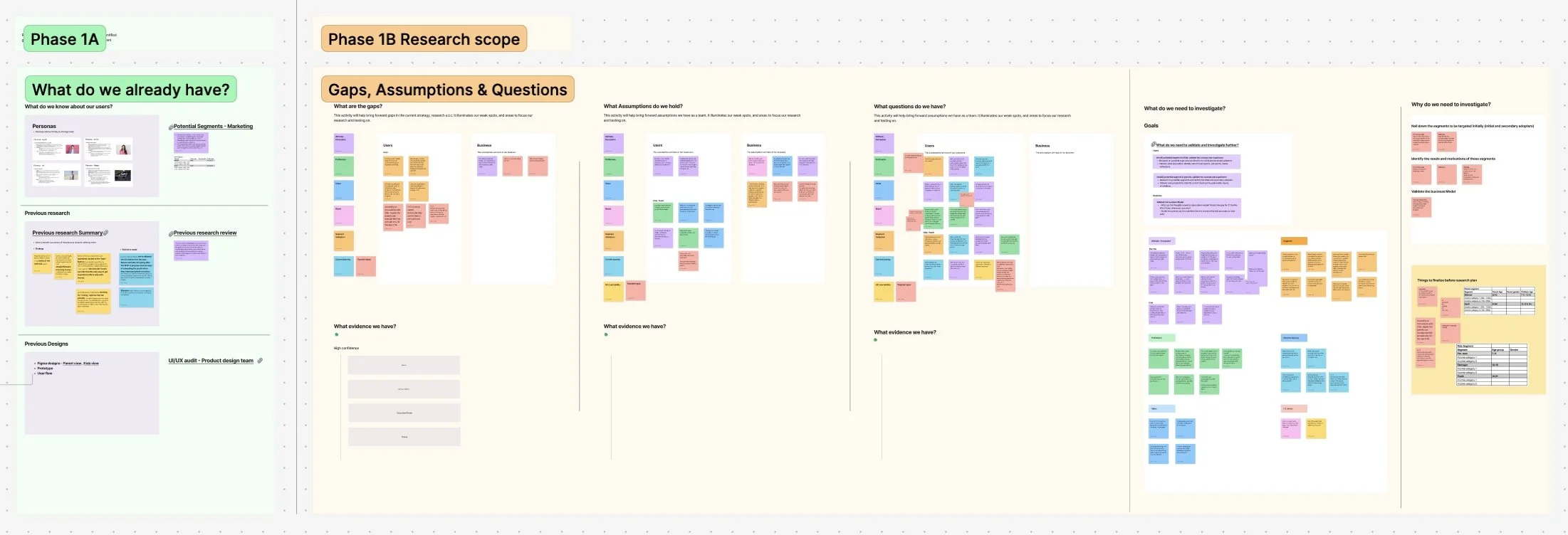
The Assumptions & Questions Document: This acts like a "brain dump" where the entire team pours in their assumptions and comments—a safe space where there is no "right or wrong" :).
Thematic FigJam Board (Workshop): The assumptions and questions are then grouped into major buckets and discussed in a collaborative workshop. I use this session to align on research goals as a team, ensuring everyone is involved and knows exactly what we are about to research. This collective alignment then makes it easier to pitch the most suitable research methodology, because the method we choose is directly dependent on achieving our agreed-upon goals.
2
Transparent operations
I ensure the team always has a bird’s-eye view of the research: what's happening, when they are needed, and what the next steps are.
An organized Google sheets/Notion folder with a similar step-by-step pattern for all projects does the magic. Anyone who views the folder can immediately understand the status and flow of my work.
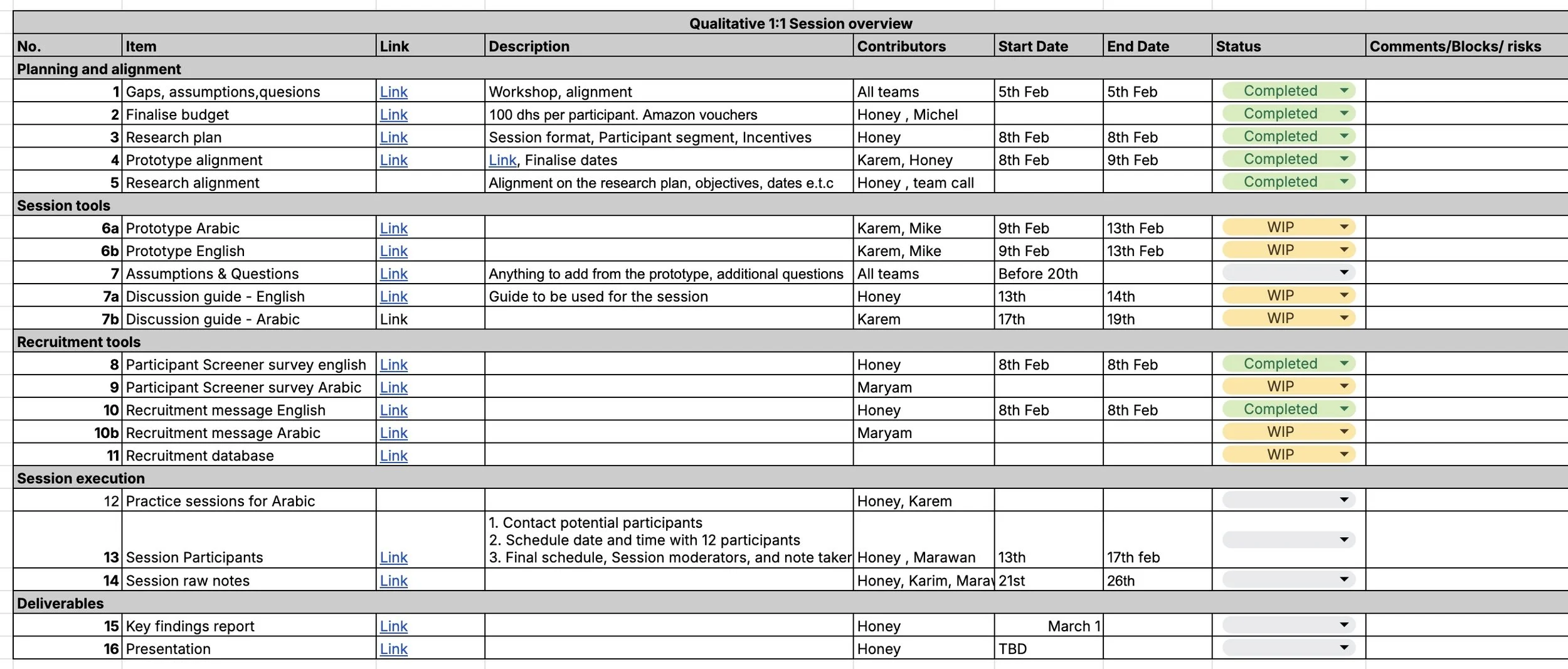
I prioritize continuous visibility and provide frequent, timely updates to ensure transparency throughout the project.
“Hey team, our usability sessions start Monday! Expected to conclude on Thursday if all the sessions move as per schedule.Just to recap, our objectives are…….”
🕵️♀️
Sounds great! Looking forward to the results!
🤩
3
Actionable insights
This is what we found out. This is why it happened. This is why it is important. How might we..
🕵️♀️
1. What did we find out? (The Evidence)
This establishes credibility and common ground. It is the objective, undeniable data (the observations, quantitative metrics, or usage patterns). We ground ourselves in the facts before interpretation begins.
2. Why is this happening? (The Root Cause)
This is the true insight—the fun part! I use my skills to dig past the surface and figure out the real "why." Is it a user's motivation? Organizational friction? Understanding the root cause is the key to designing a solution that actually works.
3. Why is this important to the business? (The Strategic Implication)
I directly link the user insight to our shared business goals, the product roadmap, and viability concerns. This ensures stakeholders understand the risk of doing nothing and the potential ROI of our research.
4. How might we...? (The Call to Action)
By ending with a "How might we..." question, I invite collaborative solution-building. It provides a clear, evidence-backed direction for the design and product teams to move forward immediately without needing further analyze the research reports :)
I ensure our findings are immediately usable and strategically valuable. To drive action and eliminate confusion about what to do next, I frame every insight presentation using four essential questions:
4
Impact Measurement: I don't just deliver data; I work with product teams to define key success metrics and set up systems to measure the tangible business impact of implemented research insights.
Closing the Loop: I actively follow up on recommendations to ensure accountability. This ensures findings translate into realized product features or strategic shifts, confirming the research investment was worthwhile and building a history of trust.
Research is a strategic investment, and as a partner, I ensure we maximize its value by continually tracking its impact on our goals.
Accountability and followup
🕵️♀️
How i select research methods
I let the problem dictate the method.I apply a strategic filter to ensure the chosen approach is always the most efficient and reliable path to securing the evidence needed for a viable decision.
Before any test begins, I assess the project across three key dimensions. This systematic approach guarantees the method directly serves our strategic question and maximizes resource efficiency.
Dimension 1 : Product stage : Where are we in the product lifecycle?
Discovery/Exploration: Generative (e.g., Interviews, Contextual Inquiry)
Testing/Optimization: Evaluative (e.g., Usability Testing, A/B Testing)
Dimension 2: Insight Type : Do we need to understand the 'Why' or the 'How Many'?
Deep Understanding (Why): Qualitative (e.g., Interviews, Diary Studies)
Scale & Validation (How Many): Quantitative (e.g., Surveys, Analytics, A/B Testing)
Dimension 3: Risk & Resource : What decision is this research enabling, and what is the cost of being wrong?
High-Risk/Strategic Decision: Rigorous methods, often Mixed-Methods (Qual + Quant)
Low-Risk/Tactical Decision: Leaner methods (e.g., Guerrilla Testing, Heuristic Review)
P.S - I do have a personal soft spot for contextual inquiry and user interview sessions :). Because they're the best way to build genuine empathy for the user which i believe is the most critical ingredient we have for successfully bridging that gap between what users really need and what the business should build.
Testimonials
Want to know what my teammates thought? Here are some testimonials from some amazing colleagues i have worked with.